
Elk Sounds: Learn to Make
Realistic Sounding Elk Talk
Making elk sounds properly while hunting will increase your chances of success, especially during the rut. On this page we will get down to the nitty gritty of doing elk talk with elk hunting calls. We will provide a variety of natural recordings of elk in the wild.
Recent Articles


-
Elk Calling Done Right: Making Elk Sounds that Get You Close to Elk
Elk calling requires an understanding of what elk talk means and when they are used. With understanding and practice you can learn elk talk to use elk hunting calls effectively.
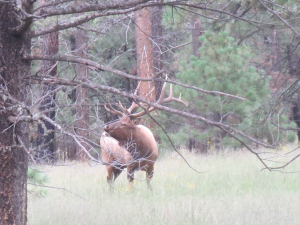
A bugling elk call is great for locating bulls early in the morning. There are lots of other bull sounds that, if done at the right time and place, can result in elk in your lap. Cow sounds can also be very effective, if done intelligently.
Many hunters think any bugling other than a locator call is a bad idea. If you know when and what call to make, bull sounds can be very effective. Any call that doesn't make sense to the elk will usually result in elk moving away from you.
Chirps and Mews
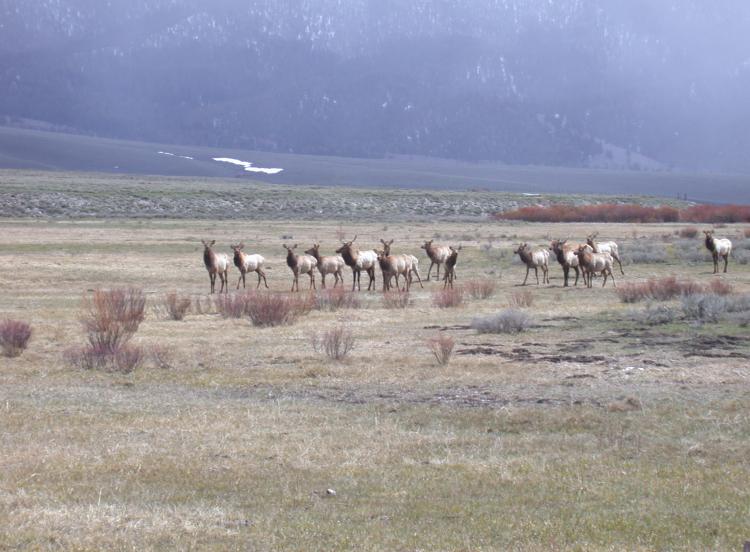
The calm elk sounds of a contented herd of cows and calves, or an estrus whine during the peak of the rut can convince a bull you are what he wants to hear. Cows and calves, and even bulls, all make “mews” and “chirping” elk sounds. A mew sounds like a drawn out chirp.
Chirps: Chirps are short noises made by all elk. It’s a good assumption to assume they use this sound to stay in touch with each other. Elk herds are very sociable. They like to stay in touch (elk texting?). A chirp discussion very possibly means something like, “I’m OK over here. How about you?”
To make a cow chirp on a call (mouth diaphragm, hand held blow call, or squeeze bulb) figure out how to make a high pitched squeal “eee” and how to make a lower tone “uhh” with first more and then less pressure. The eee and uhh are both short in duration with no pause. “ee-uh”. The higher the pitch, the younger and smaller the animal (calf).
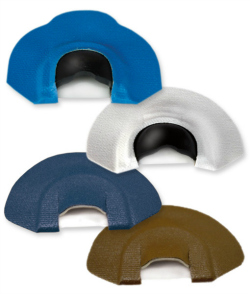
Mews: Mews are a little longer elk sound than a chirp and can become quite pleading. “eeeuuuuuh”, It might be reasonable to think it’s like saying, “I’m over here. Where are you? Let’s stay close.” Of course, mews can go from sounding quite relaxed, to an outright pleading attitude.
“Attitude” is a very good word to use when describing tone changes in all elk talk. An older cow will have a more commanding nasal sound at the end. Eee-uuuuh, with a sharp stop, not trailing off.
Calf mews are a very high pitched, “eeuh”. They are often somewhat desperate sounding when they have been separated from their mother or the herd. (Actual lost calf audio) They will often keep it up until they get “found” again.
If you duplicate a calf mew, you might find that a cow elk comes to you. The cow will know it’s not her calf, because they know their own calves’ voices. But, most mothers will try to help a crying, lost "child".
If you really want to get the attention of a herd of cows (that might have a bull among them), a calf mew could be done repetitively for several minutes, while walking around rather noisily. When a calf is lost, he wanders around making desperate pleading mews.
Just in case, be ready to get into shooting position quickly. An arrow nocked anytime you're calling could prevent missing an opportunity you weren't expecting so soon.
Here is extended audio of a lost calf, with cows and bull sounds.
The Dredded Elk Bark
An elk bark is one elk sound you don’t normally want to replicate, or hear in the woods! Usually it is done in a stressful situation to indicate danger is present.
The first time I heard a bark many years ago was when a big cow snuck up on me while I as cow talking. She saw me before I saw her. She barked and it sounded much like a dog. She was staring eye to eye with me.
Perhaps the bark is kind of like a curse word, like when someone startles you. It is meant as a startled warning. The elk that makes it will soon move away, followed by those around it.
The Nervous Grunt
There is something referred to as a "nervous grunt" that many hunters confuse as the warning bark. Here's an audio of an elk doing it. When an elk makes this sound it is asking for a visual. An elk making the nervous, or "popping" grunt sound will stick around for a while looking for confirmation of an elk it thinks is nearby (you calling).
You can use it in a hunting situation. It can make an elk show itself when you make the sound. If you make the sound with an elk very near, the shooter should get his bow drawn!
You're asking for a visual. Be ready for one! Just make sure you make the popping grunt, not the nervous bark. It can also be used very effectively to stop an elk for a shot with your bow drawn, even with just your voice.
Estrus Elk Sounds
The estrus whine (actual recording) is an excited vocal expression that cows make when they are ready, or close to ready to be bred. Bulls are highly motivated and aroused when they hear that “love talk”, but they probably have a good idea when that sound should be heard. If you do it too soon before the peak of the rut, the bulls might get suspicious. Overusing the estrus whine can be counter-productive. But it could be the magic needed in the moment.
Some elk calling experts separate a “hyper hot” cow elk sound from standard “estrus” sounds and some will use the two terms interchangeably. It does seem that some cows get extra pumped up with the gyrating, wavy calls they make when they are ready to be bred. I think it’s a good assumption that an elk making this sound is saying, “I am sooo ready! Get over here you big hunk!”
It sounds like wavy pleading high pitch variations, not just two tones as with the mew. There is no exact cadence because all elk are different. The biggest problem is doing it too much, or outside the rut. Sometimes it works toward the end of the rut, because some cows go into estrus late.
A cow’s estrus cycle only lasts about 24 hours. A desperate, pleading estrus whine might be something she does when she feels the need very strongly. Sometimes they plead their case with more “emotion”.
Reproduction is a very high priority and the Lord created these effective communication methods, along with scents and smell receptors, and all the rutting rituals in order to sustain strong herds through competitive bulls.
If you make an estrus whine at the right time and a bull buys it, he can suddenly get stupid real fast. Use the estrus call judiciously, though.
This might be a good time to spray some of that nasty smelling “cow elk in estrus urine” into the air, particularly if the breeze suddenly switches in the direction of the bull and you can’t do anything to correct the situation.
Here's an estrus sound that most hunters will never hear, but should try to replicate at the right time. It is called the "estrus buzz" and sounds like this.
Bull Bugling
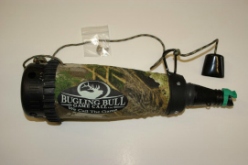
Remember that bulls mean many different things with the sounds they make. All make the different sounds with their own way of "talking", but the nuances of the language are specific and meaningful. It would serve us well to learn those nuances.
Many hunters have decided that elk bugling should not be done, except for locator bugles. However, if we stop saying the wrong things at the wrong times and start making sense with the calls we make, bull sounds start to become effective.
A Locator Bugle is a relaxed bugle made when bulls want to let other elk know where they are and find out where other elk are. It’s a good elk sound to make first thing in the early morning before or just after daylight to help you decide where to go in pursuit of elk. If you can scout at night with your ears, responses to a locator bugle will tell you where to go in the morning.
Locator bugles are not aggressive sounding. Sometimes they are just a single long note (actual audio). Deep growls and grunts are usually not done at the end.
(Actual recording of live bull doing locator bugle.)
A Display Bugle sounds a little more aggressive, but is mainly a show off bugle for the cows in the area. A little more growl is added at the beginning and end of the bugle with some grunts and chuckles.
To do the growl, simply add your growly voice while you use the call. Do some grunts and chuckles at the end by huffing in and out with gravely voice sounds. Often a bull displaying will also be raking up a smaller tree. Simulate that with a stick on a tree trunk while doing some stomping.
A Challenge Bugle is made by a bull who wants to intimidate other bulls with an angry sounding growly, screaming bad boy bugle.
(Audio of actual challenge bugle.)
(Actual audio of several bulls challenging each other.)
There are times to get aggressive and do a challenge bugle with stomping and raking. It's best done when you've sneaked in very close to the bull. An aggressive challenge right among his herd could bring him stomping in around the brush you're behind.
Don't worry about scaring off the rest of the elk, if it's the big bull you want. He'll just be pissed that you are running his cows around. Be ready for a shot!
ElkNut's DVD, Bugling Bulls and Beyond discusses aggressive calling in Volume 4, as does the Playbook.
Chuckles are short in and out sounds used sometimes after, or even without, a bugle sound. Bulls make this sound when they are talking to cows around them.
Making this bull elk sound using a latex diaphragm reed call in your mouth requires a quick in and out huffing action. Cough out sharply into the grunt tube while blowing over the reed and then immediately suck air back in.
Do this repeatedly for a few seconds. Use your growly voice at the same time. Chuckles are important elk sounds to to make, again at the right time and place. Chuckling to another bull's cows might bring him your way. At least it could make him do a challenge bugle to let you know what his mood is. You can then respond to his mood appropriately, with the right sounds at the right time.
(Actual audio of bull chuckling.)
Sometimes elk get quiet and all you might here is a subtle grunt and chuckle sequence, particularly once the day heats up, or human presence makes the bulls a little more cautious. In the heat of the day, match the mood with some quiet grunts, squeals or chuckles, mews and chirps near a bedding area. Listen carefully for subtle elk sounds.
Glunks are weird noises made in the back of the throat by a bull. They do this when they are near cows. You can easily make this sound yourself by slapping the mouth end of your grunt tube. Add it to your arsenal of elk sounds you can use. A herd bull might want to check you out.
(Recording of glunking and mews.)
Develop an Ear for the Music
Elk sounds are beautiful music to an elk hunter. It means you’re right there among them, or they’re just over the ridge. It’s good to be familiar with all of the elk sounds and I have not covered them all here. You don't have to be able recognize or make them all.
At a minimum, learn to make cow elk sounds with hand held reed calls, or diaphragm calls. Add locator bugles, grunts, chuckles, nervous grunts, even glunking and you’ll be making elk sounds that will help you have “close encounters of the herd kind”. Take some time to learn what they all mean. Practice, practice, practice!
Related topics available:
Learning Elk Talk
Product Review of Elk Calls
Recordings of Elk in the Wild
Calling Elk In Close
Predicting and Hunting the Elk Rut
Bow Hunting Elk
Please subscribe to or our Quick Elk Hunting Tips and Updatesnewsletter or to an RSS feed (see left column for both) to be alerted whenever new information is added to the site.
We'd appreciate it if you would "Like" us on Facebook, or share this site with others.
To "Calling Elk" page from "Elk Sounds" page.
To "Elk Calls" page.
To Recorded Elk Sounds page.


Comments:
Hector, TX: "Wow, that was fast! It's very pleasant to see your sincere spirit of service and customer care... You are doing way more than selling products to customers like me...we are getting tremendous value from all you do with your site and your business."
Tim, AZ: "This morning, she was 145# on the hook. I definitely owe some of my success to your website and your products. Thanks again!"
Jesse, NM: "I just wanted to thank you for taking the time and energy
in creating such an amazing and helpful website. As a new hunter, this provides
an excellent guide to approaching elk hunting. I just wanted to thank you for
sharing such a wealth of knowledge, and giving us new hunters a fighting chance
of filling a tag. You guys are amazing!!!"
Skip, (Tucson, AZ) "Your Elk Hunting Tips Web Site is the best, most helpful
one I have ever seen. I read and profit more than I can tell you. I just wanted
to tell you THANKS!
P. Scott, (BC 2016) "I would like to thank my hunting partner for the great company & this website for the wealth of information that I have gleaned & also the gear bought as every bit of info etc. is required to harvest one of these regal animals."
Thomas (OR), "Reading your tips has helped me to formulate a hopefully
positive and safe game plan for the 2014 elk season!"
Travis (WI), "I just wanted to say thank you for your site, and helpful emails! I got several useful tips from you, and your site. ...got to put the smack down on my first elk, a beautiful New Mexico 300 class bull."
Tristan, Superior, CO: "I feel like I could go on forever here, I just get so excited talking about elk and I don't know many other hunters… Thanks again for the gear, and the website. I have found it to be very useful and enlightening.
Jordan, MT: "Your website is a great help! I wanted to personally thank you for the great tips on hunting elk. I am extremely excited for this elk rifle season as its my first. I wish you luck during your hunts and God bless!"
Shop Our Store

Newsletter Opt-in:
"I just get so excited talking about elk.." ~Tristan, CO
Search This Site Here:
Hunting Gear Reviews
ASAT CamoElkNut Outdoor Prod.
Bugling Bull Game Calls
HECS Stealthscreen
Montana Decoy
StringSling Bow Sling
Skull Hookers
Safari Sling Rifle Sling
Clip-Shot Mini Camera Mount
ASAT Camo
Bugling Bull
Game Calls
ElkNut Productions
Free Shipping on
ElkNut Products Here
HECS Stealthscreen:
A New Type of Concealment!
$199.99,
Including U.S. Shipping
Montana Decoy Elk/Deer
Available Here!
The StringSling:
Best Bow Sling Design!
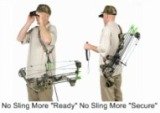
$29.95, Including U.S. Shipping
Clip-Shot: 1 oz. Camera Mount
Skull Hookers
$34.99 & 59.99 Free U.S. Shipping!
The Safari Sling:
Best Rifle Sling Design!
Share your elk hunting pictures and stories on our
Facebook Page!
Forum Topic Discussions:
How often should I use my cow call?, I am new to the sport of bow hunting elk and my question is how often should I use my cow calls?
295 yard kill with a Kimber Montana 325 WSM, by Don from Dallas: My ELk did not even twitch once. He was dead when he hit the ground.
325 WSM is worth considering, Palmer Lake,CO: I believe that the .325 WSM is the ultimate elk caliber...
30-30 for Elk? : I have a 30 30 with 170 grain round nose bullet. Will this work to shoot an elk ?
(More comments about Best Elk Rifle below)
Submissions
Unique Elk Talk by Idaho Steve (Hailey, Id ), In the middle of the night, a herd of elk came traveling through the drainage and right past my tent...
Smelly Elk Areas? by Jimmy (New Mexico), I've come across many areas that just stink of elk, literally. I have heard two somewhat contradictory stories...
DIY Gear List Must Have's! by Craig (Florida) "Here are some of the items I use on my DIY hunts in the CO backcountry..."
Elk and Deer Hunting and Mountain Bikes, by Skip Shepherd (Tucson, AZ)~ At 67 I am thinking a lot about investing in a mountain bike to get back into remote areas...
Solo archery hunting -- tips for calling/set up?, by Idaho Steve (Hailey, ID )~ I hunt by myself a lot...I'd love to hear your thoughts on strategic set-ups when solo hunting and calling.
Non- Lead Bullets for Elk?, by Dave, Elk Hunting Tips.Net (Garrison, MT)~ What do you ballistics guys think about the use of non-lead bullets for elk? According to this story...
Rage Broadheads by Chris, ...my buddy gave me a rage practice tip and when I shot it you could not pick out the broadhead from the field points. I was sold...
Recent Submissions:
Finally filled the freezer..., Colorado Rockies~ "I was bummed when I got to the property and no elk, nor any hoof prints in the snow. ...I pulled each of the elk into shade then started gutting..."
Wounded Veteran Elk hunts, by Joshua FL), I am a disabled veteran of Operation Iraqi Freedom and have always dreamed of hunting elk. I am posting this to see if anyone would know of any elk hunts free to disabled vets....
First Elk with a Bow, by Ryan H. (Colorado), ...Finally after many years of hunting with a bow "I got er did"!
First Elk!, by Tater (Sheridan, Arkansas) I took the advice I received from this website and was successful…I wanted to Thank You and Your Forum and the folks that share on here for the knowledge and information that helped me find an elk I was quite happy with.
Any success in Unit 14?, by: Dave (MI), "I'm planning on doing a DIY in Unit 14 for 2012..."
Bugle in Herd bulls, by Swiltbank (Az) The key to calling in a herd bull is to get into his bedding grounds and threaten his herd. Start off sounding like…
Best Rifle Caliber?, by Buglemup (Superior, MT), "I've been reading what people have been writing about rifle calibers and here is what 16 years of guiding elk has taught me."
7mm Remington Magnum, by Dean (Helena, MT. USA) I use my Liberty Ruger M77, 7mm Rem. Mag. for antelope, deer, elk... Comment: "What do you guys think about the idea of hunting elk with a 270? I also know a guy who kills elk with a 243."
338 Marlin Express, "Light, fast shooting, hard hitting, manageable recoil, and for a lever gun - very accurate."
Guns I like for Elk, by Mountain Walker (Kootenays east B.C. Canada),"I think the gun you shoot Elk with should be one you shoot a lot with... "
.35 Remington, by Bill Smith "...my .35 Rem appears to have dropped a medium deer flawlessly, but I now have serious doubts as to its capability to take an elk."
Where to hunt in Az unit 3B?, by Cliffjumper (Tucson, Az) ~ I got a late bull muzzle loader hunt in Arizona unit 3b. Does anyone know how to hunt bulls in the late season?...
First time elk hunter hunting Arizona unit 6A , by Rob Marchio (Omaha, Ne)~ I'm a first time elk hunter hunting Arizona's unit 6A. I'm planning on staying in the Pine Grove campground...
Help needed for 1st DIY Hunt w/Son, by Patrick (Parker, CO), "I was looking for some advice on my 1st DIY hunt for 2014 in CO with my 13 yr old son. I have countless hrs going over stats, topo maps & Google Earth"
Elk Hunting Colorado in 2013, By William (Midland, TX) "I am planning an elk hunt next year in Colorado and I wanted to know if hunting Gunnison National Forest..."
Unit 60 Elk 4th Rifle Season Nov 13-17 Either Sex 2013, By Chester "...Any general advice about the unit would be appreciated!"
Elk Hunting Idaho Unit 8 8A 11, This is my first year seriously trying to track down some elk. Is there anyone that has hunted in any of these units and can give me some friendly advice? Mitchell, Moscow Idaho
Elk Hunting Pocatello by Cameron (Pocatello) Where is the best place to elk hunt around Pocatello, Idaho? I'm a student at ISU and I'm looking for somewhere around here to hunt next season.
How is the elk hunting in unit 30A in Idaho?, by Terry (Richland Center, WI) Has anyone archery elk hunted in unit 30A in Idaho? What can you tell me about the area?
Hunting in Western Montana, by Mike A. (Alabama)
I did not draw a tag for Missouri breaks where I have hunted in the past. Having to start over and try western Montana.
New Mexico Unit 49, by Silas (Los Alamos, NM)
If anyone has tips on areas to start scouting, I'd really appreciate it.
First Elk Hunt First Elk Hunt, by Big "R" (NM)
I finally got drawn for a late elk hunt in Unit 28, north of Road 506 and south of the boundary line of the Lincoln National Forest...
Cow elk in Nevada's unit 222:
"Any good places known in unit 222?"
Northeast Nevada Early Elk hunt, by John (Carson City,NV)
"Any suggestions on what areas I may see some signs of elk?"
Retired USMC MSgt Needs Advice, by Ken Wing USMCRET (Bealeton, Va)
Popcorn VenisonPopcorn Venison with Maple Syrup?
Elk or Venison Steaks Grilled to Perfection Here's how to turn them into steakhouse steaks!
Spice-Crusted Grilled Venison Roast Recipe This Spice-Crusted, Grilled Venison Roast recipe works great for any red meat roasts, including elk, deer or beef roast...
Corned Elk Recipe You can easily make corned venison and elk, moose or corned beef from these instructions...
New! Comments
Leave a comment in the box below.