
Scent Control Hunting: Above all
Avoid an Elk’s Nose!
Scent control hunting is an absolute must. Elk can smell so well that they can reportedly pick up a molecule or two of odor carried hundreds of yards away. The distance depends on the conditions. Just assume they can smell a mouse fart in a whirlwind and you’ll get the picture.
The problem is the mouse gas wouldn’t bother them. But a few molecules of body odor, smells from your truck seat, the bacon aroma from camp, the smell of your wife’s strawberry/banana lip balm left on you from a morning kiss… Well, scent control can get pretty crazy, if taken to extremes.
Recent Articles


-
Elk Nut (Paul Medel) Elk Communication Products Now Available
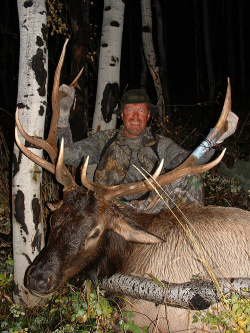 “Elk Nut”, Paul Medel, has studied elk sounds for over 30 years. His products will help you have more “close encounters of the herd kind”. Available with free shipping on this site.
Wind Management
The first priority of scent control hunting is not what you smell like or absence of smell, it’s wind management. If the wind is blowing from the elk to you, they will not smell you. End of problem. In fact, you’ll probably smell them.
I often check wind direction when I smell elk to find out what direction the smell is coming from, then stalk in that direction. However, it’s not always possible to keep the direction of scent movement in your favor, so we’ll get back to that below.
First, respect the wind. Remember this, even if there is no perceivable breeze, there is one. Your scent is being taken somewhere. Also, no matter what you do to correct for your own smell, there is one (or many). Complete “scent elimination” from your body and equipment is not possible, but the phrase is thrown around often.
If you don’t use a scent free wind indicator powder, you can’t know exactly which way a light breeze is blowing. The powder is cheap and very helpful for scent control hunting. Apply a light, continuous pressure on the bottle, away from your body (so you don’t block the prevailing breeze) and you can watch which way the stuff is blown for several seconds.
If it is blowing in the general direction of the elk, relocate to fix the problem. Experience tells me that elk 200 yards away are usually not going to smell you, except under ideal conditions (for them). The odors get diluted as they move downwind with more and more distance. However, if I’m not ready to take an immediate shot, and there seems to be a direct breeze toward them, I’ll still correct the situation.
Scent control hunting with a bow becomes much more critical, since close up action is required. However, in thicker timber when you have to move closer to get a clear window to shoot through, the same problem arises.
If the wind isn’t right, look for a way to relocate yourself to make it right. Better they hear you moving than smell you. If an elk (or deer) sees you, they may not bolt. If they hear you moving, they may not pay it any mind, or they might stare at you. If they smell you, game’s over!
Relocate to Correct the Wind Direction
As you look for a way to correct the wind, you still need to pick a route that will not allow them to see you moving. The quieter, the better. There are ways to make acceptable walking noises that sound non-human. (See “stalking elk” coming soon.)
Moving might mean you have to guess which way they are going to move while you are relocating. If you’ve patterned the local elk well, you might be able to make an educated guess as to which way they will move, if they are moving at all. As you circle around, give them wide birth and then move in carefully from your new location. Look for "elk parts" instead of whole elk as you move closer to relocate them.
I’ve heard a few guys say they don’t bother trying to minimize their own scent, because they just work the wind. The problem with that is no one can completely avoid unpredictable and changing breezes. Also, you sometimes get pinned down real close to elk so you can't move. I’ve had them walk around me many times.
Minimizing Your Scent
It’s a good idea to take some reasonable measures for personal scent control. What we’re really talking about is minimizing the scent you carry with you. Again, “scent elimination” is actually quite impossible, but the term is used freely among manufacturers of scent control hunting products.
There is a scent control hunting scientist that participates on some of the forums on the Internet who calls himself the Scent Professor. We will summarize some of his shared knowledge about scent control hunting on these two links that you can click on when you're ready to consider the topics:
To read about Scent Control Sprays, Soaps and Detergents click here.
For our Scent Control Hunting Clothing Review page. Click here.
Please subscribe to or our Quick Elk Hunting Tips and Updatesnewsletter or to an RSS feed (see left column for both) to be alerted whenever new information is added to the site.
We'd appreciate it if you would "Like" us on Facebook, or share this site with others.
Search this site here:
Comments:
Hector, TX: "Wow, that was fast! It's very pleasant to see your sincere spirit of service and customer care... You are doing way more than selling products to customers like me...we are getting tremendous value from all you do with your site and your business."
Tim, AZ: "This morning, she was 145# on the hook. I definitely owe some of my success to your website and your products. Thanks again!"
Jesse, NM: "I just wanted to thank you for taking the time and energy
in creating such an amazing and helpful website. As a new hunter, this provides
an excellent guide to approaching elk hunting. I just wanted to thank you for
sharing such a wealth of knowledge, and giving us new hunters a fighting chance
of filling a tag. You guys are amazing!!!"
Skip, (Tucson, AZ) "Your Elk Hunting Tips Web Site is the best, most helpful
one I have ever seen. I read and profit more than I can tell you. I just wanted
to tell you THANKS!
P. Scott, (BC 2016) "I would like to thank my hunting partner for the great company & this website for the wealth of information that I have gleaned & also the gear bought as every bit of info etc. is required to harvest one of these regal animals."
Thomas (OR), "Reading your tips has helped me to formulate a hopefully
positive and safe game plan for the 2014 elk season!"
Travis (WI), "I just wanted to say thank you for your site, and helpful emails! I got several useful tips from you, and your site. ...got to put the smack down on my first elk, a beautiful New Mexico 300 class bull."
Tristan, Superior, CO: "I feel like I could go on forever here, I just get so excited talking about elk and I don't know many other hunters… Thanks again for the gear, and the website. I have found it to be very useful and enlightening.
Jordan, MT: "Your website is a great help! I wanted to personally thank you for the great tips on hunting elk. I am extremely excited for this elk rifle season as its my first. I wish you luck during your hunts and God bless!"
Shop Our Store
Newsletter Opt-in:
"I just get so excited talking about elk.." ~Tristan, CO
Search This Site Here:
Hunting Gear Reviews
ASAT CamoElkNut Outdoor Prod.
Bugling Bull Game Calls
HECS Stealthscreen
Montana Decoy
StringSling Bow Sling
Skull Hookers
Safari Sling Rifle Sling
Clip-Shot Mini Camera Mount
ASAT Camo
Bugling Bull
Game Calls
ElkNut Productions
Free Shipping on
ElkNut Products Here
HECS Stealthscreen:
A New Type of Concealment!
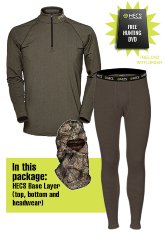
$199.99,
Including U.S. Shipping
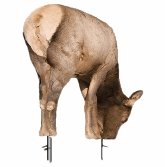
Montana Decoy Elk/Deer
Available Here!
The StringSling:
Best Bow Sling Design!
$29.95, Including U.S. Shipping
Clip-Shot: 1 oz. Camera Mount
Skull Hookers
$34.99 & 59.99 Free U.S. Shipping!
The Safari Sling:
Best Rifle Sling Design!
Share your elk hunting pictures and stories on our
Facebook Page!
Forum Topic Discussions:
How often should I use my cow call?, I am new to the sport of bow hunting elk and my question is how often should I use my cow calls?
295 yard kill with a Kimber Montana 325 WSM, by Don from Dallas: My ELk did not even twitch once. He was dead when he hit the ground.
325 WSM is worth considering, Palmer Lake,CO: I believe that the .325 WSM is the ultimate elk caliber...
30-30 for Elk? : I have a 30 30 with 170 grain round nose bullet. Will this work to shoot an elk ?
(More comments about Best Elk Rifle below)
Submissions
Unique Elk Talk by Idaho Steve (Hailey, Id ), In the middle of the night, a herd of elk came traveling through the drainage and right past my tent...
Smelly Elk Areas? by Jimmy (New Mexico), I've come across many areas that just stink of elk, literally. I have heard two somewhat contradictory stories...
DIY Gear List Must Have's! by Craig (Florida) "Here are some of the items I use on my DIY hunts in the CO backcountry..."
Elk and Deer Hunting and Mountain Bikes, by Skip Shepherd (Tucson, AZ)~ At 67 I am thinking a lot about investing in a mountain bike to get back into remote areas...
Solo archery hunting -- tips for calling/set up?, by Idaho Steve (Hailey, ID )~ I hunt by myself a lot...I'd love to hear your thoughts on strategic set-ups when solo hunting and calling.
Non- Lead Bullets for Elk?, by Dave, Elk Hunting Tips.Net (Garrison, MT)~ What do you ballistics guys think about the use of non-lead bullets for elk? According to this story...
Rage Broadheads by Chris, ...my buddy gave me a rage practice tip and when I shot it you could not pick out the broadhead from the field points. I was sold...
Recent Submissions:
Finally filled the freezer..., Colorado Rockies~ "I was bummed when I got to the property and no elk, nor any hoof prints in the snow. ...I pulled each of the elk into shade then started gutting..."
Wounded Veteran Elk hunts, by Joshua FL), I am a disabled veteran of Operation Iraqi Freedom and have always dreamed of hunting elk. I am posting this to see if anyone would know of any elk hunts free to disabled vets....
First Elk with a Bow, by Ryan H. (Colorado), ...Finally after many years of hunting with a bow "I got er did"!
First Elk!, by Tater (Sheridan, Arkansas) I took the advice I received from this website and was successful…I wanted to Thank You and Your Forum and the folks that share on here for the knowledge and information that helped me find an elk I was quite happy with.
Any success in Unit 14?, by: Dave (MI), "I'm planning on doing a DIY in Unit 14 for 2012..."
Bugle in Herd bulls, by Swiltbank (Az) The key to calling in a herd bull is to get into his bedding grounds and threaten his herd. Start off sounding like…
Best Rifle Caliber?, by Buglemup (Superior, MT), "I've been reading what people have been writing about rifle calibers and here is what 16 years of guiding elk has taught me."
7mm Remington Magnum, by Dean (Helena, MT. USA) I use my Liberty Ruger M77, 7mm Rem. Mag. for antelope, deer, elk... Comment: "What do you guys think about the idea of hunting elk with a 270? I also know a guy who kills elk with a 243."
338 Marlin Express, "Light, fast shooting, hard hitting, manageable recoil, and for a lever gun - very accurate."
Guns I like for Elk, by Mountain Walker (Kootenays east B.C. Canada),"I think the gun you shoot Elk with should be one you shoot a lot with... "
.35 Remington, by Bill Smith "...my .35 Rem appears to have dropped a medium deer flawlessly, but I now have serious doubts as to its capability to take an elk."
Where to hunt in Az unit 3B?, by Cliffjumper (Tucson, Az) ~ I got a late bull muzzle loader hunt in Arizona unit 3b. Does anyone know how to hunt bulls in the late season?...
First time elk hunter hunting Arizona unit 6A , by Rob Marchio (Omaha, Ne)~ I'm a first time elk hunter hunting Arizona's unit 6A. I'm planning on staying in the Pine Grove campground...
Help needed for 1st DIY Hunt w/Son, by Patrick (Parker, CO), "I was looking for some advice on my 1st DIY hunt for 2014 in CO with my 13 yr old son. I have countless hrs going over stats, topo maps & Google Earth"
Elk Hunting Colorado in 2013, By William (Midland, TX) "I am planning an elk hunt next year in Colorado and I wanted to know if hunting Gunnison National Forest..."
Unit 60 Elk 4th Rifle Season Nov 13-17 Either Sex 2013, By Chester "...Any general advice about the unit would be appreciated!"
Elk Hunting Idaho Unit 8 8A 11, This is my first year seriously trying to track down some elk. Is there anyone that has hunted in any of these units and can give me some friendly advice? Mitchell, Moscow Idaho
Elk Hunting Pocatello by Cameron (Pocatello) Where is the best place to elk hunt around Pocatello, Idaho? I'm a student at ISU and I'm looking for somewhere around here to hunt next season.
How is the elk hunting in unit 30A in Idaho?, by Terry (Richland Center, WI) Has anyone archery elk hunted in unit 30A in Idaho? What can you tell me about the area?
Hunting in Western Montana, by Mike A. (Alabama)
I did not draw a tag for Missouri breaks where I have hunted in the past. Having to start over and try western Montana.
New Mexico Unit 49, by Silas (Los Alamos, NM)
If anyone has tips on areas to start scouting, I'd really appreciate it.
First Elk Hunt First Elk Hunt, by Big "R" (NM)
I finally got drawn for a late elk hunt in Unit 28, north of Road 506 and south of the boundary line of the Lincoln National Forest...
Cow elk in Nevada's unit 222:
"Any good places known in unit 222?"
Northeast Nevada Early Elk hunt, by John (Carson City,NV)
"Any suggestions on what areas I may see some signs of elk?"
Retired USMC MSgt Needs Advice, by Ken Wing USMCRET (Bealeton, Va)
Popcorn VenisonPopcorn Venison with Maple Syrup?
Elk or Venison Steaks Grilled to Perfection Here's how to turn them into steakhouse steaks!
Spice-Crusted Grilled Venison Roast Recipe This Spice-Crusted, Grilled Venison Roast recipe works great for any red meat roasts, including elk, deer or beef roast...
Corned Elk Recipe You can easily make corned venison and elk, moose or corned beef from these instructions...
New! Comments
Leave a comment in the box below.